Climate Change Coverage and Key Aspects of Climate- Smart Teaching
Article Sidebar
Main Article Content
ანოტაცია
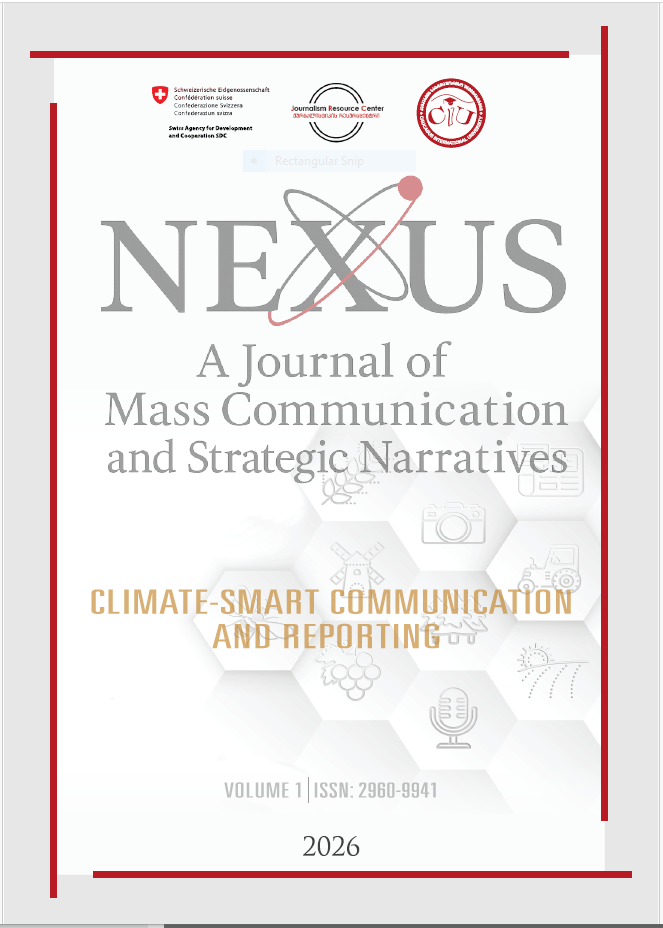
Impact of Climate Change on the agricultural sector is a global issue in the 21st century. Due to the topical nature of the problem, it is essential to effectively communicate with the public. Because of the current political climate, topics that have an impact on development, economy, and wellbeing of the country have remained outside the media’s attention. It is also noteworthy that national broadcasting networks, alongside with mass media outlets that are responsible for spreading information, allocate less time to similar topics as mentioned above. The target of our study is the role of the printing press and social media in spreading information pertaining to climate change and ways to mitigate the impact of this phenomenon.
Also, the article discusses existing communication gaps and specific findings, which explain low engagement from the public. Quantitative and qualitative analysis, which serves as basis for our research, helps us make conclusions on: 1) thematic frequency and intensity of coverage; 2) narratives that dominate, with the influence of traditional knowledge; 3) inclusivity of local farmers in media discourse; 4) importance of teaching climate-aware reporting in higher education institutions, within journalism programs.
Main findings of the research make it clear that climate change related topics are discussed in the media as an abstract environmental problem and are rarely connected with specifically agricultural perspectives. Also, it does not entail information that would help farmers to increase their knwoledge and form long term sustainable strategies. Analysis of media content and narratives clearly shows that they mainly focus on disasters and extreme events rather than on the sustainable and adaptive potential of agro-ecological systems. Education on climate-responsible reporting is not part of university curricula, which prevents future journalists from receiving appropriate education.
In summary, existing media practices and improvement of media literacy is one of the decisive factors for achieving agro-ecological
sustainability. Considering existing challenges, media organizations must ensure that reporting materials prepared in context of climate change are more ethical, thorough, and contextual. Correcting these errors will help raise public awareness and increase their participation in addressing the issue. The development of appropriate syllabi for climate-aware education must begin in high education institutions, which will provide the new generation of journalists solid training for reporting on global issues such as climate change.